

Ask whether the Comfy Garden Clogs' listed 100–120 g weight applies to one shoe or a pair before using it in a travel budget. The range alone does not identify the number of shoes being weighed.
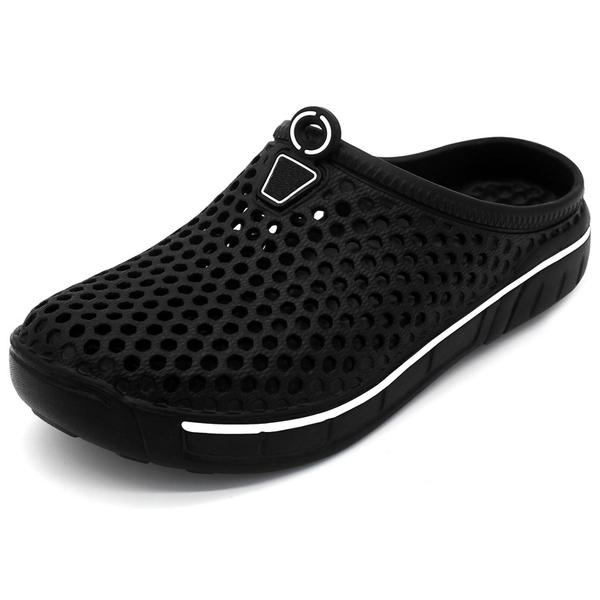
Comfy Men Shoes describes Comfy Garden Clogs as lightweight and gives that 100–120 g figure. Keep the wording and its unresolved quantity together instead of quietly treating the lower number as a packed-pair weight.
Two interpretations produce different totals
| What 100–120 g describes | What it would mean for two shoes |
|---|---|
| One shoe | Conditional total: 200–240 g |
| The complete pair | Keep 100–120 g; do not double it |
These are alternative readings, not two confirmed product specifications. During Black Friday and Cyber Monday shopping, resolve which reading the store intends before comparing the clogs with another travel item.
Ask a question tied to your selection
Ask: “Is 100–120 g the weight of one shoe or the complete pair, and which size was weighed?” Size and packaging details can matter to the figure you actually need.
Do not use the single shoe pictured as proof of how the written weight was measured. A photograph identifies appearance, not the weighing procedure.
A luggage example
Suppose you reserve 250 g in your own packing plan for an extra pair of shoes and its storage bag. Even a confirmed shoe-only figure would leave the bag's weight to be counted separately.
Once you own the pair, put both shoes and the intended bag together on a suitable scale. Record that complete packed amount for your own luggage plan. Do not add a label or packaging weight from a different product.
Compare complete arrangements
If you compare another pair, use the same rule: both shoes, the bag you will actually carry and the same weighing conditions. A clearly defined total is more useful than ranking two products by weight figures that count different things.
The measurement addresses packing mass. It does not rank comfort, grip, durability or suitability for a particular activity.